Plein Air Painting Mixing the Zorn Palette
A Study in Restraint
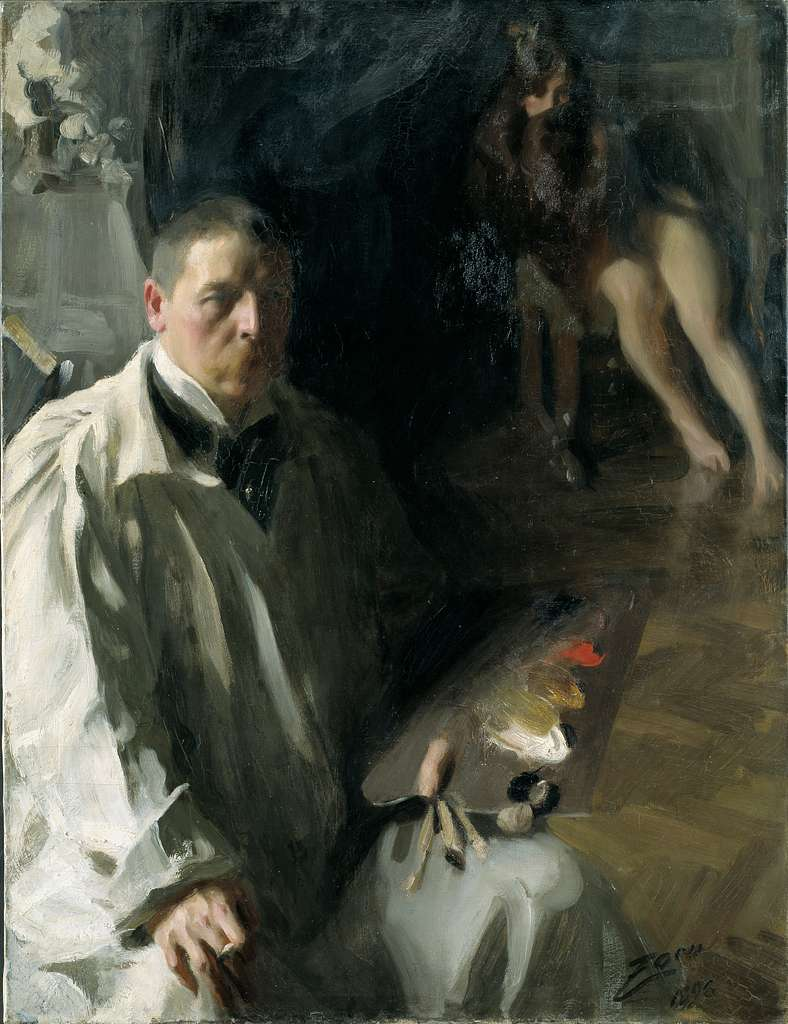
Anders Zorn was a master of Swedish painting. He was famous for using a very limited palette. This is now called the “Zorn palette.” It usually consists of only four pigments. These are white, black, red, and yellow. One will notice that blue is missing.
The artist did not see this as a limitation. He used the black pigment to suggest the missing blue. When black is mixed with white, it creates a cool gray. The artist then placed this gray next to warm yellows or reds. This juxtaposition tricks the eye. The gray appears to be a distinct bluish hue.
This method requires a strong observer mindset. The perceived blue is a visual phenomenon. It is not an inherent property of the paint itself. Zorn understood that the eye completes the color. The relationship between neighbors on the board is what matters.
Using few colors forces a focus on values and temperature. The artist must lock in the composition quickly. This leads to a plain-spoken landscape or portrait. Abundant color is not required for impact. Harmony comes from simplicity and blocking.
The Zorn palette is a lesson in observational honesty. It teaches one to paint what is seen rather than what the mind assumes. By finding complexity in a few pigments, the painter connects the brush to the heart.
See our “Color Lab: Creating a Zorn Palette Grid” tutorial.
Related Posts

About The Author

