
The Essential 202
FREE Tips for Plein Air
The field is an unforgiving studio. To succeed, one must respect the shifting light, the physical demands of the environment, and the weight of tradition. The following principles are distilled from the lineage of the masters—from the Hudson Valley to the Russian academies.
I. Logistics and the Prepared Mind
- Simplify the palette. A limited selection prevents mud and forces color harmony. Restricting pigments allows the artist to master relationships rather than tube chemistry.
- Weight is the enemy. Every ounce carried is an ounce of stamina drained. One must move with agility to reach the best light.
- Tone the canvas. A neutral mid-value ground eliminates glare. The artist should never fight the starkness of a white panel in bright sun.
- Check the wind. Position the easel as a sail away from the artist or anchor it with stone. A sudden gust can turn a canvas into a kite.
- Squint often. This simplifies complex scenes into manageable value masses. One must blur the world to see the truth of its structure.
- Prioritize big shapes. Details are meaningless if the large masses of light and shadow are incorrect. Build the house before hanging the curtains.
- Paint the light, not the object. The sun is the true subject; the trees are merely its stage. Capture the energy of the photon striking the surface.
- Value does the work. Color takes the credit, but value holds the structure together. If the values are correct, the color can be almost anything.
- Observe the horizon. Keep it level to maintain the integrity of the earth’s plane. A tilted horizon breaks the viewer’s trust in reality.
- Watch the clock. Shadows move faster than the brush; choose a light effect and commit. Chase the ghost of the moment before it vanishes.
- Standardize the kit. Every tool must have a dedicated place. Confusion in the backpack leads to frustration on the trail.
- The tripod is a foundation. Use a heavy-duty tripod to ensure the easel does not wobble. A steady hand requires a steady earth.
- Carry a viewfinder. Isolate the composition from the overwhelming vastness of nature. The window crops the infinite into a singular statement.
- Manage the glare. Wear neutral gray or black to prevent colored reflections on the canvas. Remain a neutral observer in the theater of light.
- The umbrella is essential. Keep the palette in uniform shadow. Painting in direct sun is like mixing colors in a hall of mirrors.
- Pack a mirror. View the painting and the scene in reverse to refresh the eye. It instantly reveals errors in drawing or balance.
- Carry a trash bag. Secure it to the easel for used towels. The artist protects the environment that provides the inspiration.
- Use a palette knife for mixing. This saves the life of the brushes and keeps colors clean. A knife allows for quick, decisive mixing of large piles.
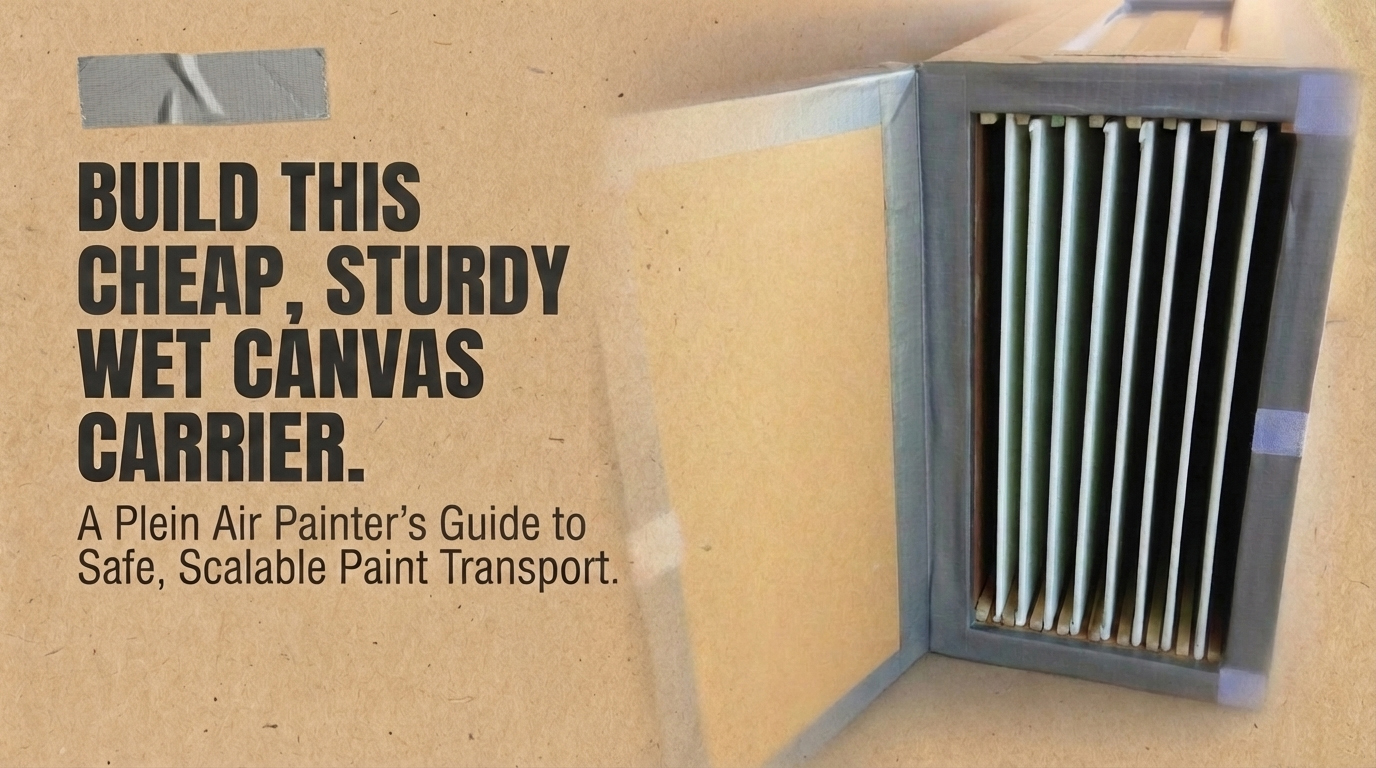
- Keep a wet carrier. One must have a safe way to transport wet panels. A slotted box is the shield for the day’s labor.
- Dress in layers. Comfort is the foundation of concentration. One cannot paint the light while shivering in the cold.
- Hydrate consistently. The physical demand of the field is high. A thirsty artist makes impatient decisions.
- Check the weather twice. Knowledge of an approaching storm allows the artist to pack up before the rain ruins the linen.
- Anchor the umbrella. Use a tether or a bungee cord to ensure the umbrella doesn’t fly away. An airborne umbrella is a danger to the artist and the work.
- Use a neutral-colored palette. A wood or gray palette allows for accurate value judgment. White palettes distort the perceived darkness of the paint.
- Keep solvent in a sealed canister. A metal brush washer prevents spills and keeps the spirit fresh.
II. The Grammar of Composition
- The “L” composition. Use a large vertical mass on one side and a horizontal plane for stability. This anchors the viewer’s eye.
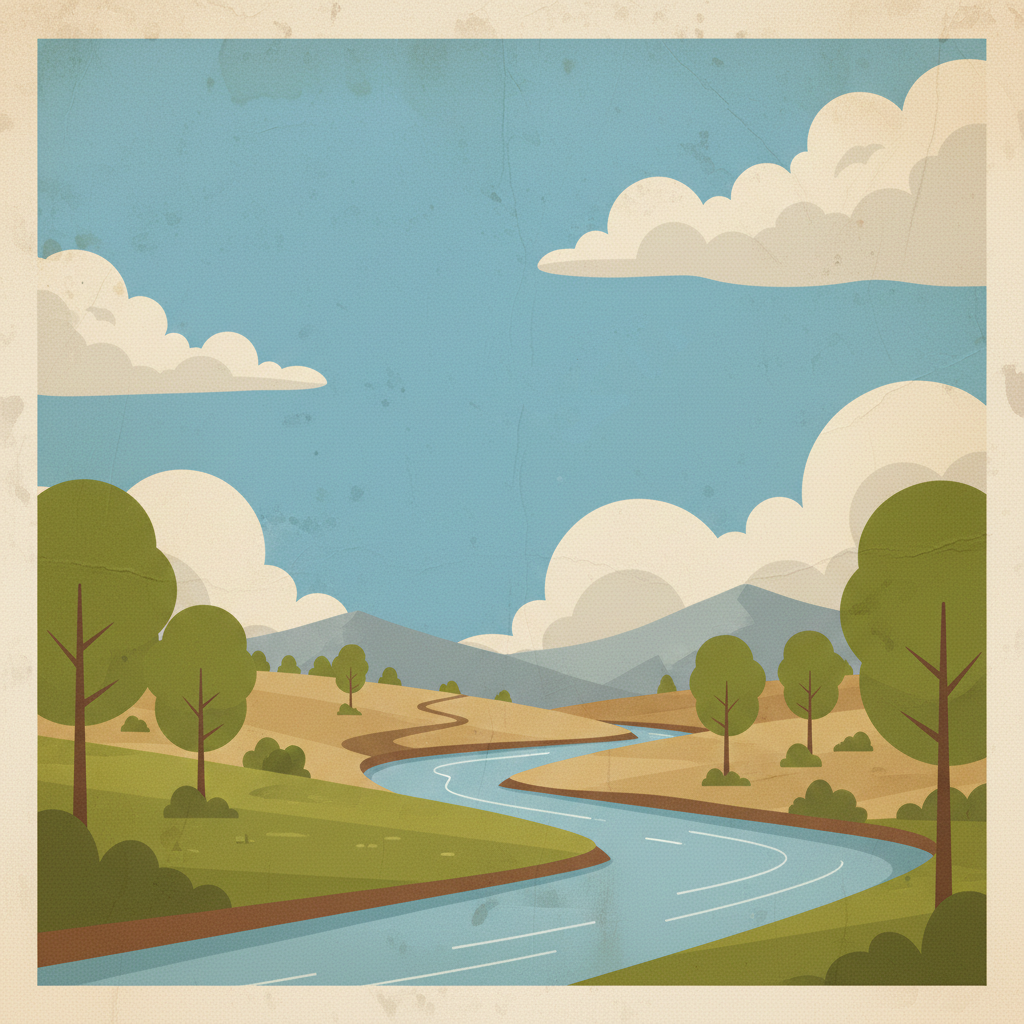
- Lead-in paths. Use roads or streams to guide the viewer toward the focal point. The path is an invitation to enter the scene.
- Avoid “halving.” Do not place the horizon exactly in the middle. Choose to celebrate either the sky or the land.
- Overlap shapes. Depth requires placing one object clearly in front of another. Overlapping creates the illusion of space on a flat surface.
- Diminishing size. As objects recede, they must get smaller. The eye interprets scale as distance.
- Atmospheric perspective. Distant masses should be lighter, cooler, and softer. One must paint the thickness of the air itself.
- The Rule of Odds. Groups of three or five trees feel more natural. Nature avoids tidy, symmetrical pairs.
- Counterpoint. Balance a large dark mass with a small, bright spark of color elsewhere. This creates visual rhythm across the linen.
- Check the tangents. Ensure edges do not merely touch; they must overlap or separate. Tangents create unwanted visual tension.
- The “S” curve. A winding path creates an elegant journey for the eye. It is the most graceful way to navigate the distance.
- Find the focal point. Identify the one area that deserves the most detail and highest contrast. A painting with ten focal points has none.
- Group the darks. Connect shadow shapes to create a strong, simple design. Fragmented shadows make for a restless painting.
- Vary the intervals. The space between trees or rocks should never be equal. Uneven spacing creates a more organic, truthful feel.
- Look for the “V” shape. Use converging lines to pull the eye into the center of the composition. This is the geometry of the perspective.
- Use “Steelyard” balance. A large weight near the center can be balanced by a small weight far from the center.
- Avoid “bullseyeing.” Never place the primary subject in the dead center. It creates a static, uninteresting image.
- Watch the corners. Do not let lines lead the eye directly out of the corner of the frame. The corners should act as a subtle container for the scene.
- The “Radiating Line.” Use lines that fan out from a point to suggest energy and movement.
- Balance horizontal and vertical. A strong vertical tree needs a horizontal ground to feel grounded.
- Scale with figures. A small figure or animal instantly provides a sense of the landscape’s vastness.
- Use silhouettes. A strong silhouette of a tree against a sky communicates the subject instantly.
- Consider the “Cruciform.” A composition based on a cross shape provides a sense of spiritual stability.
- Look for the “Triangle.” Triangular groupings of objects provide a sturdy, classic base.
- Leave “breathing room.” Ensure the subject is not cramped against the edge of the canvas.
- Identify the “Mother Shape.” Find the dominant geometric form in the landscape and repeat it subtly.
III. Observation and the Sun’s Truth
- Find the sun. Know exactly where the light source is at all times. All shadows must obey this single point.
- Observe “penumbra.” The edge of a shadow becomes softer as it moves away from the object.
- Look for core shadows. The darkest part of the shadow is often just before the light starts to wrap around.
- Note the color of the sky. It is almost never pure blue; it is a gradient from the zenith to the horizon.
- Identify reflected light. Light bounces from the ground into the shadow side of objects.
- Paint the “terminator.” The line where light meets shadow is the most descriptive part of the form.
- Observe the “Golden Hour.” The low sun provides long shadows and a warm glow that lasts only minutes.
- Look for “cast shadows.” These describe the topography of the ground they fall upon.
- Note the angle of the sun. In winter, the light is lower and weaker; in summer, it is harsh and overhead.
- Identify “local color.” This is the color an object appears under neutral, flat light.
- Observe “highlight” placement. Highlights occur where the surface is most perpendicular to the light source.
- Look for “translucency.” Light passing through a leaf or ear creates a glowing effect.
- Note the “Blue Shift.” Distant shadows often lean toward blue or violet due to the atmosphere.
- Identify “specular reflections.” These are the bright glints on water or glass.
- Observe “cloud shadows.” Use them to break up large, flat areas of the landscape.
- Note the “Albedo.” Different materials reflect different amounts of light; snow is high, soil is low.
- Identify “form shadows.” These are the shadows on the object itself that describe its volume.
- Look for “caustics.” These are the dancing light patterns at the bottom of a stream.
- Note the “Glow.” The area around the sun often appears lighter and warmer due to scattering.
- Identify “occlusion shadows.” These are the very dark spots where two surfaces touch.
- Observe “aerial perspective.” Warm colors advance; cool colors recede.
- Note the “Scattering.” This is why the sky is blue and the sunset is red.
- Identify “diffuse light.” On a cloudy day, the light is soft and shadows are nearly invisible.
- Look for “halos.” Light catching the edges of hair or fur creates a rim light effect.
- Note the “Color of the Day.” Every day has a dominant hue that influences every mixture.
IV. Technical Mastery and Color Harmony
- Avoid tube black. Mix chromatic blacks (e.g., Burnt Sienna and Ultramarine). A mixed black has a vibration that a dead pigment lacks.
- Fat over lean. Apply thicker, medium-rich paint over thinner initial washes. This ensures the structural integrity of the paint film.
- Warm shadows, cool lights. In direct sunlight, shadows lean warm while highlights catch the sky’s cool.
- Vary the edges. Hard edges draw the eye; soft edges allow it to pass. Control the edge to control the viewer.
- The largest brush possible. This prevents fiddling and encourages bold marks. Speak in clear sentences rather than whispers.
- Scrub the darks. Keep shadow areas thin and transparent. The eye should be able to peer into them like a deep pool.
- Load the lights. Apply highlights with thick, opaque impasto. Physical height on the canvas catches the room’s light.
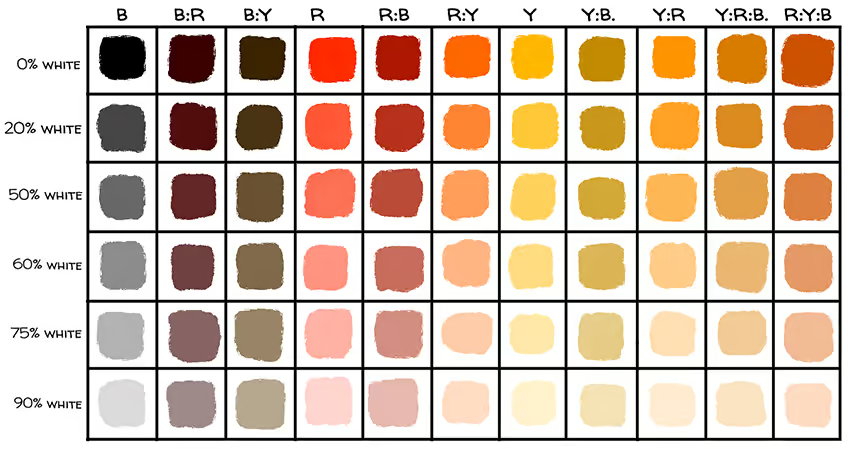
- The Zorn Palette. Achieve harmony using only Yellow Ochre, Cadmium Red, White, and Black.
- Gray is the glue. Vibrant colors only sing when surrounded by neutral grays.
- Reflected light. Shadows catch the sky’s color; leaf-undersides catch the grass. No surface exists in a vacuum.
- Seek “tooth.” Use a surface with resistance to allow the brush to grab the pigment.
- The Mother Wash. Establish the temperature of the day with a thin, transparent tone.
- Wipe back for lights. Use a rag to find the brightest highlights early. Subtraction is as powerful as addition.
- Scumble for atmosphere. Drag cool color over a warm ground for shimmering distance.
- Load the “Bead.” For final highlights, place a three-dimensional jewel of light and lift straight off.
- Use “Broken Color.” Place small strokes of different hues side-by-side to create vibrancy.
- Avoid “local color” traps. Grass is rarely just green; it contains red, orange, and blue.
- Mix enough paint. Nothing kills momentum like running out of a custom mid-tone.
- Keep brushes clean. A muddy brush leads to a muddy painting. Wipe after every stroke if necessary.
- Use “Impasto” wisely. Save the thickest paint for the areas you want the viewer to notice first.
- Apply “Glazing.” Use thin, transparent layers to adjust the color of a dry area.
- Try “Alla Prima.” Aim to finish the painting in a single session while the paint is wet.
- Use a “Mahlstick.” This stabilizes the hand for fine details without touching the wet surface.
- Experiment with “Sgraffito.” Scratch into wet paint to reveal the underlayer for texture.
- Practice “Blending.” Soften the transition between two colors while they are both wet.
V. Trees, Earth, and Water
- Paint the “skeleton” of the tree. Understand the branching structure before adding the foliage.
- Group the leaves. See the foliage as large masses of light and shadow rather than individual leaves.
- Identify the “sky holes.” These small gaps in the foliage allow the sky to peek through and provide air.
- Vary the tree types. Don’t paint every tree the same; notice the difference between an oak and a pine.
- Observe the “footing.” The tree must feel firmly planted in the earth, not floating on top of it.
- Paint the bark texture. Use thick paint to suggest the rough surface of the trunk.
- Look for “root flair.” The trunk widens as it meets the ground to provide stability.
- Note the “tilt” of the trees. Most trees grow slightly away from their neighbors to reach the light.
- Identify the “leader.” Most trees have one main branch that defines their height and shape.
- Observe the “foliage color.” Leaves are often darker and cooler on the underside.
- Paint the “planes” of the earth. The ground is not a flat line; it is a series of receding planes.
- Note the “texture gradient.” Grass is detailed in the foreground but becomes a smooth mass in the distance.
- Identify “soil color.” This varies wildly depending on moisture and mineral content.
- Look for “erosion.” Banks and paths show the history of the land’s movement.
- Note the “shadows on the grass.” These follow every undulation of the terrain.
- Paint the “transparency of water.” Near the shore, water is often transparent; further out, it becomes a mirror.
- Observe “reflections.” Reflections are usually darker and less saturated than the object they reflect.
- Identify “refraction.” Objects underwater appear broken or shifted at the surface.
- Look for “surface tension.” Where water meets a rock, there is a small “lip” of light.
- Note the “color of the stream bed.” This influences the color of the water in the shallows.
- Identify “ripples.” These are small planes that reflect different parts of the sky.
- Paint the “movement of water.” Use long, horizontal strokes for still water and energetic marks for rapids.
- Observe “white water.” This is aerated water that is high in value and low in transparency.
- Note the “dampness.” Rocks near the water are darker and glossier than dry rocks.
- Identify the “sky reflection.” The color of the water is primarily the color of the sky above it.
VI. The Sky and Clouds
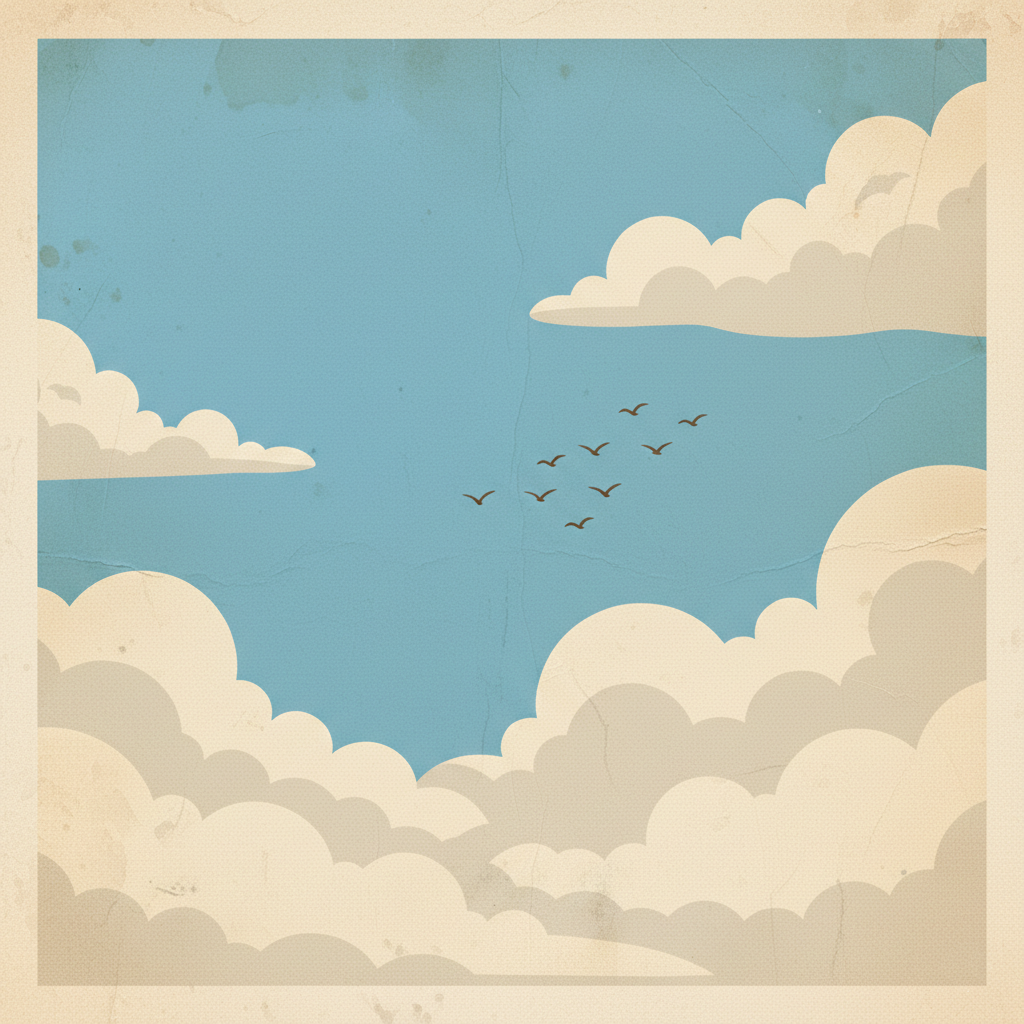
- Paint the sky first. The sky sets the color and value key for the entire landscape.
- Observe the “dome.” The sky is a hemisphere; the zenith is darker and bluer than the horizon.
- Identify “cloud types.” Cirrus, cumulus, and stratus all have different structural rules.
- Look for the “underside” of clouds. Clouds are three-dimensional objects with light and shadow sides.
- Note the “perspective of clouds.” As they recede toward the horizon, clouds get smaller and flatter.
- Identify “silver linings.” When the sun is behind a cloud, the edges glow with high-value light.
- Look for “crepuscular rays.” These are the “God rays” that fan out from the sun through gaps in clouds.
- Note the “color of the shadows in clouds.” These often contain violets, grays, and oranges.
- Identify “haze.” Dust and moisture in the air create a soft, glowing light.
- Observe “sunset colors.” The light passes through more atmosphere, filtering out blues and leaving reds.
- Note the “afterglow.” The sky remains bright for a short time after the sun has set.
- Identify “storm clouds.” These are deep in value and often have violent, energetic edges.
- Look for “rainbows.” These occur at a 42-degree angle from the point opposite the sun.
- Note the “moonlight.” The moon is a reflected light source; the shadows it creates are very dark.
- Identify “stars.” These are small, high-value points that should be placed sparingly.
- Paint the “horizon glow.” Even at night, the horizon is often slightly lighter than the sky above.
- Observe “lightning.” This is a high-energy event that illuminates the landscape for a fraction of a second.
- Note the “wind movement.” Clouds move in the direction of the upper-level winds.
- Identify “mist and fog.” These are ground-level clouds that dramatically simplify the values of the scene.
- Look for “scud.” These are small, fast-moving cloud fragments beneath a larger cloud deck.
- Note the “overcast light.” This is perfectly diffuse light with no strong shadows.
- Identify “virga.” This is rain that evaporates before it hits the ground.
- Observe “lenticular clouds.” These lens-shaped clouds form over mountains and look like UFOs.
- Note the “zenith color.” This is the deepest part of the blue sky, directly overhead.
- Identify “twilight.” This is the period of soft, cooling light between sunset and darkness.
VII. Advanced Technique and Master Wisdom
- Reference historical masters. Study Sargent for brushwork and Wyeth for mood.
- Observe the Russian school. Learn from Nikolai Blokhin about the intersection of drawing and painterly abstraction.
- Incorporate “Bato Dugarzhapov’s” lightness. Notice how he uses small, dancing strokes to suggest light.
- Study “Slava Korolenkov’s” energy. Embrace the reckless but accurate application of paint.
- Look at “James Gurney’s” color theory. Understand the science behind the art.
- Observe “Jane Hunt’s” compositions. See how she guides the eye through a complex landscape.
- Study “Erik Koeppel’s” Hudson River style. Master the art of atmospheric depth and detail.
- Look at “Daniel Keys’” floral works. Apply his color sensitivity to your landscape.
- Observe “Robin Weiss’” street scenes. See how he captures the energy of the lived-in environment.
- Study “Zufar Bikbov’s” transitions. Notice how he moves from warm to cool in a single stroke.
- Practice “mental painting.” Look at a scene and decide exactly how you would mix the colors before touching the brush.
- Use “lost and found” edges. Let the shadow side of an object merge into the background.
- Vary the paint thickness. Use thin paint in the shadows and thick paint in the lights.
- Don’t be afraid to scrape. If a section isn’t working, scrape it off and start again while the paint is wet.
- Maintain “observational honesty.” Paint what is actually there, not what you think a tree should look like.
- Embrace the “unfinished.” Sometimes a sketch captures more truth than a highly polished studio piece.
- Avoid “over-blending.” Keep individual brushstrokes visible to maintain the energy of the work.
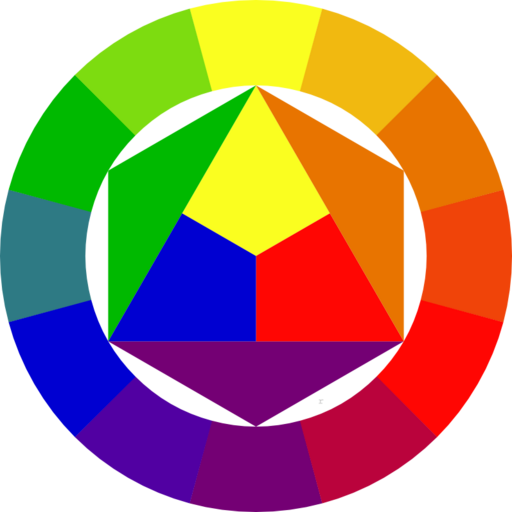
- Use “complementary” colors. A small amount of orange in a blue sky makes the blue appear more vibrant.
- Think in “planes.” Every object can be broken down into a series of flat surfaces.
- Observe the “key.” Decide if the painting is high-key (mostly light) or low-key (mostly dark).
- Use “directional” strokes. The direction of your brushwork should follow the form of the object.
- Practice “speed painting.” Set a timer for 30 minutes to force yourself to focus on the big shapes.
- Check the “silhouette.” If the painting was just a black shape on white, would it still be recognizable?
- Use “neutralizing” colors. Use a complement to dull a color rather than using black.
- Think about “temperature.” Every color is either warmer or cooler than its neighbor.
VIII. Finishing and Professionalism
- Sign with subtlety. The signature should not be the first thing the viewer sees.
- Evaluate in a mirror. Reversing the image helps you see errors you’ve become blind to.
- Wait to varnish. Let the oil paint cure for several months before applying a final seal.
- Choose the right frame. The frame should enhance the painting, not distract from it.
- Keep a painting log. Record the location, date, and lighting conditions for every piece.
- Document your work. Take a high-quality photograph of every painting before it is sold.
- Kill your darlings. If a single beautiful stroke ruins the composition, it must go.
- Practice “limited” studio refinement. Fix technical errors, but don’t lose the spirit of the outdoors.
- Rest your eyes. Stepping away for ten minutes allows you to return with a fresh perspective.
- Varnish for depth. A light coat of varnish can bring back the depth of the darks.
- Clean your gear immediately. Dried oil paint is the enemy of a long-lasting kit.
- Protect your solvent. Keep it in a safe, leak-proof container during transport.
- Carry a sketchbook. Use it for quick value studies before you start the main painting.
- Be patient with yourself. Plein air is one of the most difficult ways to paint; embrace the struggle.
- Network with other artists. Share tips and locations with your local plein air group.
- Submit to juried shows. Challenge yourself to see how your work stands up to others.
- Teach what you know. Explaining a technique to someone else reinforces your own understanding.
- Stay curious. Always look for new ways to see the world around you.
- Respect the land. Leave the painting location exactly as you found it.
- Manage your inventory. Keep track of where your paintings are and who bought them.
- Update your website. Keep your digital presence as fresh as your latest painting.
- Seek constructive criticism. Ask artists you admire for an honest critique of your work.
- Ignore the “rules” sometimes. Once you know them, you can break them with purpose.
- Paint for yourself. The most honest work comes from a place of personal interest.
- Find the joy. If you aren’t enjoying the process, it will show in the work.
- The “Unfinished” Grace. Recognize when a painting has said enough. A work that is “over-modeled” loses the breath of the outdoors.
- The “Bead” of Light. For final highlights, load a bead of paint on the tip and lift straight off. This final mark is the artist’s signature on the light.
IX. Selected Bibliography
- Blokhin, Nikolai. Russian Master Portraits. Palm Beach Gardens: Streamline Publishing, 2020. Video.
- Cole, Thomas. “Essay on American Scenery.” American Monthly Magazine 1 (January 1836): 1-12.
- Durand, Asher B. Letters on Landscape Painting. New York: Crayon, 1855.
- Gurney, James. Color and Light: A Guide for the Realist Painter. Kansas City: Andrews McMeel Publishing, 2010.
- Bikbov, Zufar. “The Russian Perspective on Light.” Artist Lecture Series. Accessed January 2026.
- Hunt, Jane. “Mastering Composition in the Field.” Professional Artist Series. Accessed January 2026.
- Koeppel, Erik. Techniques of the Hudson River School Masters. Austin: PaintTube.tv, 2015. Video.
Nature is the only teacher who never lies.
Related Posts


About The Author

