The Legacy of “Visual Music”
The Foundation of “Visual Music”
- The artist simplifies the landscape into fundamental color relationships.
- One rejects the “known” color for the truth of the light as it is actually perceived.
- The block study serves as a “color lab” to tune the eye to atmospheric keys.
- Observational honesty transforms flat shapes into a three-dimensional presence.
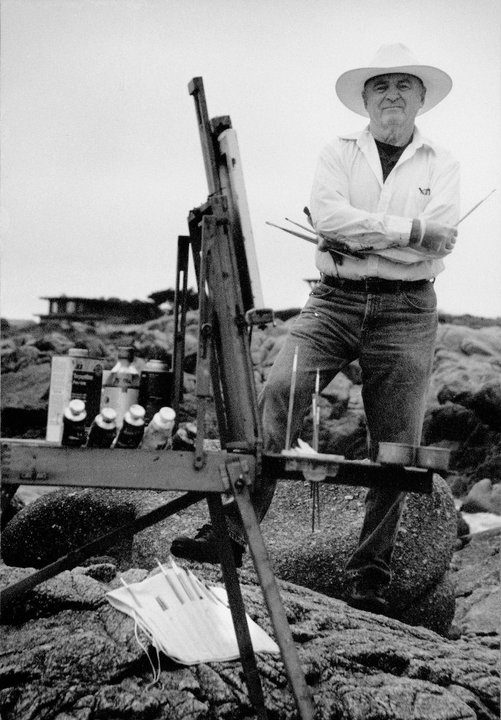
Henry Hensche was a pivotal American Impressionist and teacher. He spent over 50 years at the Cape School of Art demonstrating how to truly see. He developed a method focused on “visual music.” This is the idea that color is not a mere decoration. Instead, it is a harmony that vibrates exactly as it appears in nature. Contemporary schools may offer alternative paths. However, the Hensche method remains a foundational discipline. It is essential for any artist seeking to master the “Provincetown style” of light and color.
The Cape School of Art is far from being a relic of the past. It continues to host world-renowned plein air classes. These sessions keep the techniques of Hensche and his mentor, Charles Hawthorne, alive today.
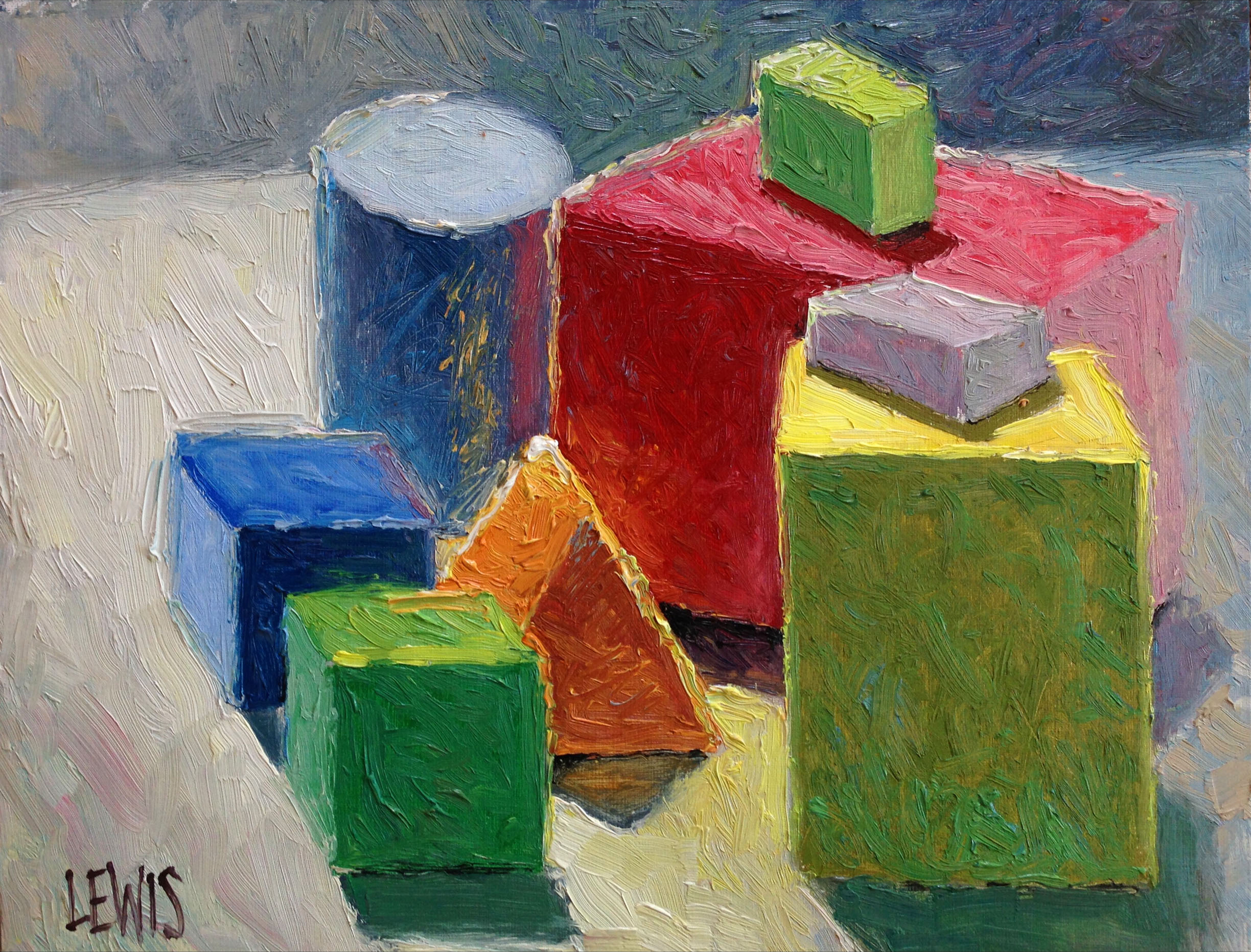
The Theory of Color Block Studies The fundamental goal of a block study is to simplify the visual field. The artist uses simple geometric shapes to ignore complex “noise.” One can set aside anatomy, distracting textures, or the demand for a perfect drawing. This allows a total focus on the elementary relationships of color as form.
- Contextual Vision: Color is never seen in isolation. Every perceived hue is a direct result of its surrounding neighbors. It also depends on the specific atmospheric light of the moment.
- The “Color Spot”: Instead of obsessing over outlines, the method emphasizes identifying “spots” of color. These spots represent the masses of light and shade. They define the object’s presence.
- Flat Color Shapes: This approach avoids using “broken color” with thousands of tiny strokes. Instead, it utilizes flat shapes of color. These shapes describe how light models itself across a surface.
- Observational Honesty: The artist must paint only what is visually perceived. One must not paint what the mind assumes. For instance, a “white” block may sit in deep shadow. It should be painted as the specific note of blue or violet it actually is. One must ignore what the brain “knows” to be white.
A Guide to the Color Block Study
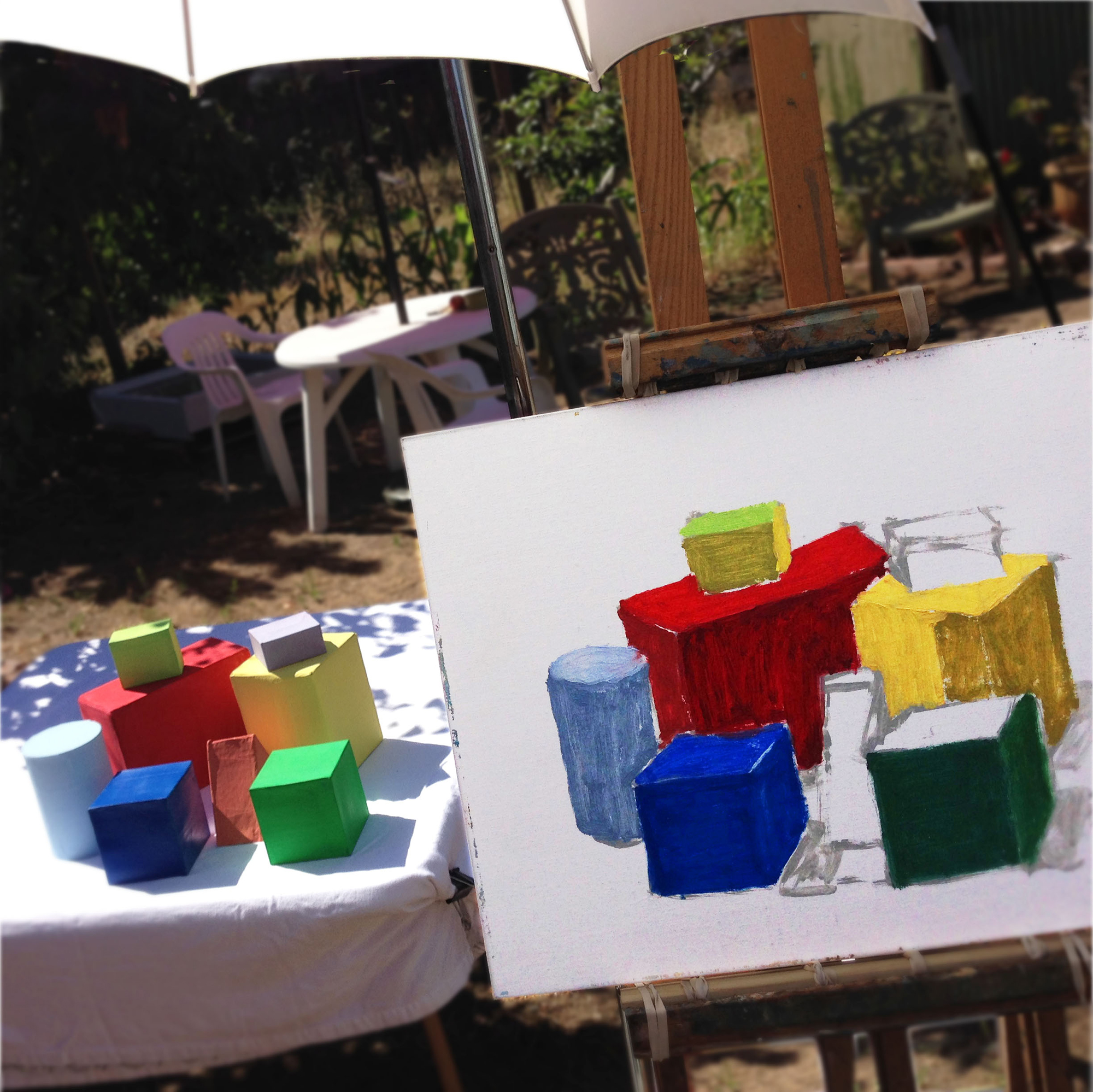
To master these principles, consider completing a number of these quick studies. Think of it as building a “color lab” to test the truth of light.
- Preparation: Build simple blocks out of cardboard. Use cubes, cylinders, or pyramids. Paint them with flat, matte poster paint. The simpler the tool, the clearer the lesson.
- The Setup: Place two or more blocks of different colors on a white cloth. Position them in full, direct sunlight. This allows the artist to observe how light “bounces” and vibrates between the shapes.
- Establishing the Key: Start by placing a spot of color in the center of the light side. Do the same for the shadow side and the background for each object.
- Harmonization: Adjust these initial spots relative to one another. Consider it like tuning a musical chord. The canvas may require four or five adjustments until the color relationships feel correct.
- Proportional Growth: Once the relationship is established, work outward from the center of each spot. Fill in the approximate proportions.
- Defining Form: Only after the colors are correctly related should the artist work on the boundary. Refine the contour to define the exact geometric shape of the block.
- Environmental Variation: Repeat the exercise under different light “keys.” Try overcast gray days or the golden hour of sunset. Observe the high-contrast light of midday as well.
The Analogy for Understanding
Consider a color block study as learning to read a compass. Do this before attempting to navigate a forest. Do not worry about specific trees or paths. These represent the details of a complex painting. Instead, the artist trains the eye to always recognize “North.” This is the true color of light. It remains steady and reliable regardless of weather or time of day.
The light is the only true teacher.The Foundation of “Visual Music”

Color Block Study Materials
Cardboard (recycled boxes)
Utility knife
Straight edge or ruler
Matte poster paint (variety of colors)
Hot glue gun and glue sticks
White cloth for the setup
Pen or pencil for marking